Table of Contents
The Gym At Your School

_in_Saint-Petersburg%2C_Russia%20(1).jpg)
When you’ve found something in your budget that looks good to you, go there in person, say you’re thinking of buying a membership, and ask to have a look around.
If you’re a beginner who isn’t sure what you want/need, here’s the main things to look for in terms of facilities/equipment:
-
A decent number and variety of cardio machines (if you plan to use them). Remember, these are the main things that get busy at peak hours (between about 5pm and 7pm).
-
Weight machines and cable machines; a large selection, ideally with duplicates or triplicates of each thing if it is a large gym
-
A free weights section with racks, various barbells, and a wide selection of dumbbells
-
Whether or not you need them, Olympic platforms are generally a green flag for a gym that knows what it's about.
Other Things To Look For
-
Change rooms that meet your needs and that you will be comfortable using.
-
Spacious parking lot/convenient bus stop/bike racks/etc.
-
Large area to leave outdoor shoes.
-
Staff who don’t look dead behind the eyes.
-
Cleanliness (old equipment is by no means a red flag, but grime is).
-
A general sense that there’ll be elbow room in there.
Things to Ask
-
How crowded does it get during peak hours?
-
Do you only do monthly/annual memberships, or do you do “punch passes” as well? Is it possible to pause monthly/annual memberships?
-
Do I get a discounted/free trial period?
-
What qualifications do your staff have?
Finding A Gym
Different types of gym, and how to suss them out
Not all gyms are created equal. Here, I will review the different kinds of gyms you’re likely to find (if you live in North America, anyway), what purposes they’re suited best for, and how to tell if it’s likely to be a good environment.
Types of Gym

If you’re in college or university, there’s probably a halfway decent gym, and you’re probably already paying for it anyway.
Quality will vary by school. If it’s one of those big crazy ones with a brand new bouldering wall and experimental looking cardio machines, you definitely want to use it if possible, because you are *definitely* paying for it.
If there are trainers here, they may be contractors, employees, or students in a related field. Practicum students in physical education related fields often offer free/cheap services, but it may be restricted to students in the same department/student athletes/etc. It doesn’t hurt to inquire, though!
Pros: No additional fee; convenient if you’re in school, likely a good facility. Might have fun extra stuff. Potential for cheap/free training services (see above).
Cons: Prone to being crowded; some potential for unfriendly/toxic environment. Often, people who think they don’t like gyms just got put off them by their college gym. Do not let this stop you from going to feel it out- but if you decide it is not the environment for you, do not let that discourage you!
Tips: Inquire with administration if there are any practicum students offering training services.
Best for: Convenient use as a student. Or if you work at the school.
"Big Box" Commercial Gyms

These are the Pl@net Fitnesses, the G0lds’ Gyms, The @nytimes, The FitforLess’. They vary in quality, crowd, and price.
An undeniably convenient thing about them is that they are often open late, and you often get a membership to the entire franchise, not just the one gym. (Great if you do a lot of domestic travel/move around a lot.)
The staff here are often casual employees working an irregular shiftwork schedule from hell. If someone is clearly trying to make commission off you, turn them down gently if you’re not interested- they've probably been dying inside for months.
Some of these will be excellent facilities; others will leave a lot to be desired. (Hang out on the fitness-internet at all and you’ll see plenty of memes about specific franchises that are notorious for being 90% treadmills and a handful of weight machines).
Pros: Long opening hours, membership to the entire franchise, some degree of quality control.
Cons: Quality of facility will vary greatly depending on the franchise. Possible solicitation of more services/membership upgrades. Some will try to lock you into yearly memberships on a very cynical business model that assumes most people won’t use their membership after January. (So if you’re 100% sure you will use it, it’s not necessarily a bad deal for you).
Tips: Research the place and its reputation. Go in person to check the place out before you buy a membership.
Best for: If you need something that's open late; if you want to start immediately and don’t know of any better options in the area; if you know you’ll be there consistently enough that an extended membership is actually a good deal.
Fancy Commercial Gyms
I don’t have any specific qualifiers for what puts a commercial gym in this category. It’s the shiny one in the swankier part of town. It might be huge, or it might be very small.
These are more guaranteed to be high quality facilities than the “big box” type- but be sure to look before you buy a membership. Sometimes they're all novelty lighting and no real substance.
The staff are *likely* to be relatively well qualified even if you live in a place where the fitness industry isn’t tightly regulated. They’re often contractors who had solid portfolios/client bases before they took their business there. If they’re employees, they may or may not be in a less exploitative arrangement than what is normal for cheaper commercial gyms.
Gyms like these may also employ specialists such as dieticians, physiotherapists, highly specialized instructors for various sports, etc.
Due to the demographic they cater to, they may be open at different hours vs the cheaper places, but this obviously will vary depending on where you are.
Pros: Usually good, sometimes there’s a spa, tennis courts, a pool, or other fancy things there too.
Cons: Expensive; will vary greatly in actual quality that might be hard for a beginner to gauge.
Tips: Sometimes, in smaller cities/towns, there'll be a small one of these that looks like it's probably insanely expensive compared to the big, less fancy one that everyone goes to- but it isn't actually much more expensive. Check out their prices before you assume.
Best for: If it’s convenient for you to get to/afford, and you like the facility.
The Gym in your Local Rec Centre

Whether it’s a municipal place, a YMCA rec center, or something similar, there’ll often be a gym, or “fitness center”, or whatever they want to call it.
Sometimes these places are very minimal and understaffed; sometimes they’re awesome.
When they’re good, they tend to be really good, in large part because they’re seldom as sales-y as commercial gyms. Trainers are usually actual employees with a certain number of guaranteed hours, and are probably not in nearly as crappy a situation as the ones at most commercial gyms.
A membership here will often mean having to have a membership to the rest of the Rec Centre, which may be a good or bad deal depending on the comparative price of local gyms and the quality of the rest of the Rec Centre. (Where I live, it’s often the same price/a little cheaper to have an all inclusive membership to the city’s rec centers vs. a decent commercial gym, and with the rec center you also get access to a pool, gym courts, and the like. Often enough there’s a place to leave your kid, too.)
Pros: Use of the rest of the rec center; most likely to be a really chill environment. If you live in a city with more than one, it’s possible that membership to one gets you into all of them
Cons: Quality varies, prone to being crowded.
Tips: If you live in a city with more than one, it's possible that membership gets you into all of them.
Best For: If it’s good, it’s probably the best value on this list.
Small Boutique Gyms
.jpg)
This category encompasses a lot of different things. Some are very sport specific, some are essentially small private clubs for elite cliques, some are oriented towards special populations such as seniors or people with disabilities, etc.
In terms of price vs. quality, it varies completely by gym. The good ones that last tend to have a very devoted membership, which can translate to a really good community.
Trainers may be employees or contractors. The owners may work there as trainers/as direct supervisors. Other professionals may or may not be present depending on the size and type of gym.
Pros: Highly specified services, potentially good community.
Cons: Will vary by gym. Can include price, a community that’s *too* close and thus a breeding ground for drama, etc.
Tips: A lot of them apparently don’t like being called “boutique gyms”.
Best for: If whatever they're doing is worth the price to you.
Women's Only Gyms

What it sounds like; women only gyms that generally have exclusively women staff.
In many places, these do good business for the understandable reason that a lot of women have had bad experiences with men in other gyms. They also tend to do well in areas with a large religious fundamentalist community.
Many women feel most comfortable with this option. However, it is worth considering that these gyms are sometimes not well equipped to serve the needs of anyone who is serious about strength training. In addition, they are known to sometimes end up being toxic environments in their own way, with things such as an emphasis on body-shaming sales tactics. (Long story, but I’m not just speaking from secondhand experience- while I was studying to be a trainer, I got to see for myself how one of these places operated.)
Group classes are often a big selling point of these gyms, as is the social aspect; they’re often pitched as a community space where you can make friends. If you like the sound of this and there is one in your area, it's worth checking out.
Depending on the business model, staff might be contractors or employees.
Pros: More comfortable for many women; potential for community space
Cons: Can be prone to cynical/toxic marketing. If you're an androgynous looking woman, you may have a rough time due to all the recent culture war bs in the media.
Tips: If the gym is an offshoot of a larger franchise, you might also get a discount/membership to the main co ed one.
Best For: If you are a woman who likes the environment/if the facility and classes serve your needs.
Studio Franchises
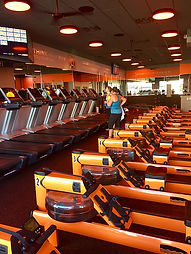
Places like 0rangetheory, Pureb@rre, almost anything with “spin” in the name, etc. These are exclusively venues for a group class of one kind or another.
The group class will be advertised as all you need for a workout plan- if you go often and consistently enough. Depending on the place, the classes can be really well designed, and can work great if you enjoy it.
Pros: Everything is set up and figured out for you; there’s usually some community; the good ones are very good.
Cons: You won’t learn how to plan workouts for yourself; environment/culture isn’t for everyone.
Tips: Pay the drop in fee a few times to see if you like it.
Best for: if you enjoy the format.
Sport Specific Gyms, Like Climbing and Crossfit Gyms

Sport Specific Gyms, like climbing and crossfit gyms
Some of these places are a fine spot to begin a fitness journey; others less so. Call or drop in to talk to them about what you’re looking for.
Pros: community, practice/instruction for a specific sport.
Cons: May not be very accessible for beginners.
Tips: See above. Also, if you want to break into whatever the thing is, but don’t know if you’ll go consistently, ask if they do punch passes rather than monthly memberships.
Best for: Doing that specific thing.
Build-A-Gym

If you’re committed enough, a home gym can be an excellent investment. You can access it whenever you want, never have to share it, and can customize it exactly to your needs.
This subject got its own article- click [here]. If your budget is literally zero, or if you can spend as much as on a decent used car, there is advice for you there.
Even if you cannot afford a full setup, move too much for it to be practical, or don’t have the space, having some equipment at home can reduce the number of days per week that you have to go to the gym, which can save you time and/or money.
Some people find it easier to consistently work out when their gym is at home. However, some people find it surprisingly less so- they don’t focus as well, and find it easier to put their workout off until later, since it’s always right there and the routine isn’t enforced by external factors like gym opening hours, commute schedules, etc.
Pros: Convenient, never crowded, and your friends can hang out and use it too. Safer for immunocompromised people. Looks cooler than any furniture or whatever else you could put in your place.
Cons: Doesn’t get you out of the house, can induce complacency, can prevent you from trying new things.
Tips: Read [the article.]
Best for: If there isn’t a gym nearby that’s good for your schedule, or one where you feel comfortable. If you are sure enough of what you want to justify the investment.