



So, you’ve made it to the gym. You’ve signed in, changed, and you have some kind of a plan in your hand or on your phone.
Or maybe you’re just going in today to find out if you want to buy a membership. That’s cool.
Either way, as you’re looking around, you’re starting to second guess yourself, because you don’t know what any of this stuff is.
Avoid this situation by reading this article!
Official Rules/Regulations
Somewhere near the front desk, and/or on the website, there’ll be a list of rules that will generally include:
-Indoor shoes must be worn (some gyms allow bare feet/socks in some areas, for specialized activities)
-No food or beverages other than water
-No dropping weights in areas where the floor is not designed for that
-Re rack your weights or so help me god…
-A handful of variations on the phrase “don’t be a jerk”
Familiarize yourself with this list and the specific guidelines of this gym.
UNSPOKEN Rules/Regulations of Most Gyms:
-If someone asks to work in, let them
-If someone asks for a spot, oblige them if it is reasonably convenient and you know how
-Earphones in = no non-essential communication
-Mind your own business, but assert your space if necessary
-Being relatively loud is socially acceptable if you are lifting a lot of weight (aka considerably more than you weigh).
-At busy times, only use squat racks and Olympic platforms for their most essential purposes.
Parts of the Gym
Stretching Area
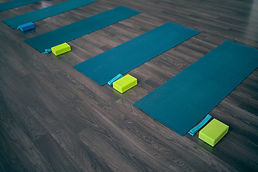
Different gyms might call it different things. Basically, it’s an area, usually with a soft floor, where you can stretch and/or do various bodyweight/mobility exercises. It will likely contain some equipment such as foam rollers and yoga balls.
Sometimes there'll be a huge elaborate one, and sometimes there won't really be one at all. Sometimes the studio area can be used as one when it isn't occupied by a class.
Do not bring dumbbells or other equipment into the stretching area.
Studio
A big room for classes and stuff. Sometimes you can work out in it when it's empty; sometimes you can't. Some places will have several, which may contain specialized equipment.
Cardio Equipment
In larger commercial gyms, there'll be a LOT of it.
If there is something you’ve never tried that looks interesting, try it.
Some gyms will have equipment with built in entertainment systems, as well as apps to track your workout.
The workout-tracking stuff is often dependent on use of a connected heart monitor, and tends to be unreliable at best. TV to watch while slogging on a machine, however, is a fantastic thing that should always be taken advantage of.
See the article on [different cardio modalities] for more information. Be careful with spin bikes, they can bite.
Machines
These are the big, clunky looking weight machines. They are all designed for the purpose of one or two exercises only, which are usually listed on them along with an illustration. Because they are so specialized, they make it hard to do the exercise wrong, because they ensure you’re in exactly the correct position.
Sounds pretty great, right? For many people, it is. They are a godsend for beginners with poor balance/core stability, people with chronic balance problems, and people with acute or chronic injuries. (Older people with chronic back issues/osteoporosis are especially well served by these.)
However, the drawback is that if you are able to develop better core stability/balance/etc within a short time frame, sticking to these may hamper your progress, because they provide a lot of support that you would otherwise be developing yourself.
Cable Machines
These are a different type of weight machine, which incorporate cables and various detachable handles.
They force you do take care of your posture on your own much more than the other machines, but still provide more stability than free weights. Some (such as the lat pulldown) also hit muscle groups that are much harder to effectively target with free weights, especially for beginners.
A cluster of cable machines is often referred to as a "cable jungle".
Free Weights
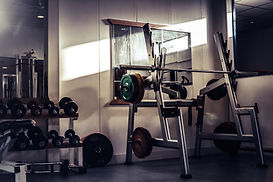
That’s this stuff. Dumbbells, barbells, kettlebells, basically everything you lift that’s not a machine.
Because any exercise you do with free weights requires you to engage your whole body to some extent, they are generally considered the most effective and efficient method of strength training. However, they’re also the easiest to injure yourself with if you don’t know what you’re doing. They also may not be suitable for some beginners, or people with some chronic injuries.
(See [definitions] article for more information on the different kinds of free weights)
Olympic Platforms
These are for weightlifting sports where dropping the weights is a part of some lifts, as well as a general inevitability in training. They prevent damage to the floor and weights. You’ll notice they have special barbell plates made of rubber next to them; this is so they bounce.
(“No dropping weights” rules don’t apply in this part of the gym; this is what these things are designed for.)
Crossfit Rig
Basically a bunch of connected racks with various crossfit related bells and whistles attached.
Plyometrics "Plyo" Boxes
For Jumping On
Battle Ropes
For whipping around
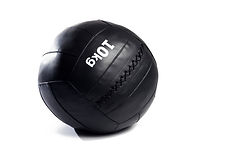
Medicine Balls
Weighted ball for stability/strength exercises. Not for throwing.
Bosu Balls
For stability/bodyweight exercises. Also please do not throw. Or do, I'm an article, not a cop.
Slam Balls
Weighted ball for strength and plyometric exercises. You can throw this one, but there are probably rules about where you can throw it.
Wobble Boards
For balance and stability exercises.
Sleds/Carts
For pulling and pushing. Most gyms that have these will also have a designated area for their use.
FAQS
I’m looking for a gym and don’t know which one to pick. Where should I go?
-If your neck of the woods has decent municipal rec centers, the gyms in those are usually good environments. (And don’t tend to be as sales oriented as the “big box” gyms). That is my main recommendation. Otherwise, check out everything within your budget- go there, tell them you’re thinking about buying a membership, and ask to have a quick look around.
-Click [here] for the full article on how to pick a gym.
What time is best to go?
-The time you’ll most consistently go at. Peak hours tend to be the two after most people get off work; do with that information what you will.
The people are jerks and I don’t have the energy to deal with that, what do I do?
-Try a different gym. If you’re going to a college gym, try literally anywhere else. If not, try a gym that doesn’t seem to cater to the same crowd.
Who do I ask for help if I don’t know what I’m doing?
-At a high quality gym, the staff will be knowledgeable. Ask the person at the front desk; they may be a trainer themselves, or they’ll know where one is. If you’re going to a place that likes to try and sell you stuff, be aware that this might lead them to try to sell you a training package. (But hey, maybe you’d like one.)
Should I talk to that person next to me?
-If they don’t have headphones, go for it.
Should I hire a trainer? What should I look for?
-You should, and the main quality you should look for in one is that they’re me. [Direct link to website?]
-Secondary to that, if your gym has trainers and you’re thinking of hiring one, do some quick googling for what the going rate is in your area, then compare that to what your local gym is offering.
-If you don’t want to buy a billion sessions, most places/trainers offer rates for one-off assessments, “starter packs” of usually about three sessions, etc.
-A good way to make use of a personal trainer with a relatively limited budget is to see them for a few sessions so they can set you up with a good program (a starter pack or similar deal is a good way to do this) and then see about setting up a session once every few months to check in on your progress.
-[See this article] for more about how to select a personal trainer or fitness coach.
Should I attend a group class?
-If it looks like something you want to try, yes!
-[See this article] for some basic information on group classes.
Should I submit a comment card at the gym that the staff work very hard and deserve a raise?
-Yes!
How do I know I’ll actually use this membership?
-By the power of the swole gods, I compel thee to go to the gym regularly until the fluorescent lights above the weight benches are imprinted into the back of your eyelids; until grip chalk and hand sanitizer permeates your pores; until the sound of slamming metal and whirring treadmills fades into white noise. And you shall become of the gym, as the gym shall become of you; it shall be your happy place after a long day of work, your solace after a breakup, your lifelong companion. The gym itself may change, but in every gym, the faithful exerciser finds themselves connected to the essence of the one great gym, the spirit gym, the transcendent interdimensional world-gym.


The Complete Beginner's Guide to the Gym